






Diving in Zanzibar: best dive sites, seasons and what to expect
Diving Zanzibar gives you access to warm Indian Ocean water, coral reefs, reef walls and dive sites suitable for different experience levels. Mnemba Atoll is the best known diving area, but there is much more to explore around Nungwi, Kendwa, Tumbatu, Leven Bank, Stone Town and the southwest coast.
Scuba diving is possible throughout the year. Water temperatures generally remain warm, while visibility, currents and sea conditions change with the season, tides and location. This variety makes Zanzibar suitable for first diving experiences under professional supervision, relaxed reef diving and more challenging dives for experienced certified divers.
Is Zanzibar good for diving?
Yes. Zanzibar is a strong diving destination because it combines warm water with varied coral reefs and a wide range of marine life. PADI lists more than 30 dive sites around Zanzibar, including reefs, walls and deeper offshore sites.
The underwater landscape varies depending on where you dive. Some sites have gentle reef slopes suitable for less experienced divers, while others have stronger currents and greater depths that require more experience.
Most diving takes place from boats. Tides and currents are an important part of diving around Zanzibar, so dive sites are normally selected according to the conditions on the day as well as the certification and experience of the divers in the group.
What are the best dive sites in Zanzibar?
Zanzibar has dive sites around several parts of the island. Mnemba Atoll receives much of the attention, but the northern coast, Tumbatu, Leven Bank, Stone Town and Menai Bay offer very different diving experiences.
Diving area |
What makes it interesting |
Experience |
| Mnemba Atoll | Reefs, walls, tropical fish, turtles, rays and varied dive conditions | Options for certified divers with different experience levels |
| Nungwi and Kendwa | Access to several northern reefs and a wide variety of dive sites | Different sites for different certification levels |
| Tumbatu | Shallower coral reefs and colorful reef life | Suitable sites available for recreational divers |
| Leven Bank | Deep offshore seamount, large schools of fish and stronger currents | Experienced divers only |
| Stone Town | Access to diving along Zanzibar’s west coast | Site selection depends on experience and local conditions |
| Menai Bay | Southwestern conservation area with coral reefs and tropical marine life | Sites available for different experience levels |
The right dive site depends on your certification, experience, weather, currents and what you would like to see. A local dive instructor or dive center can recommend the most suitable site based on your experience and the actual marine conditions.
Diving at Mnemba Atoll
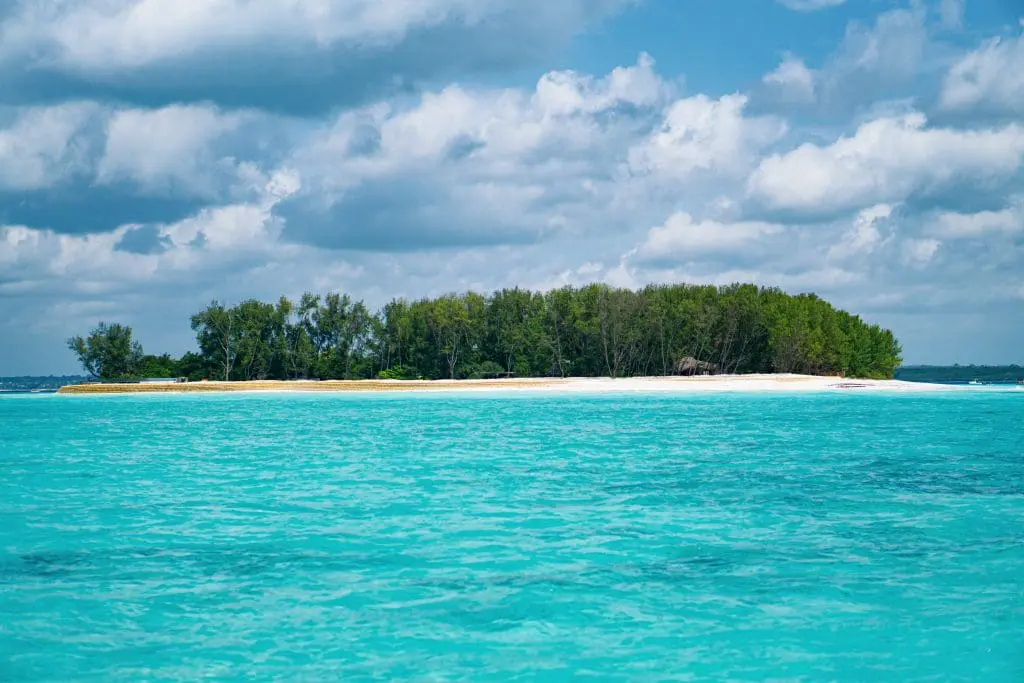
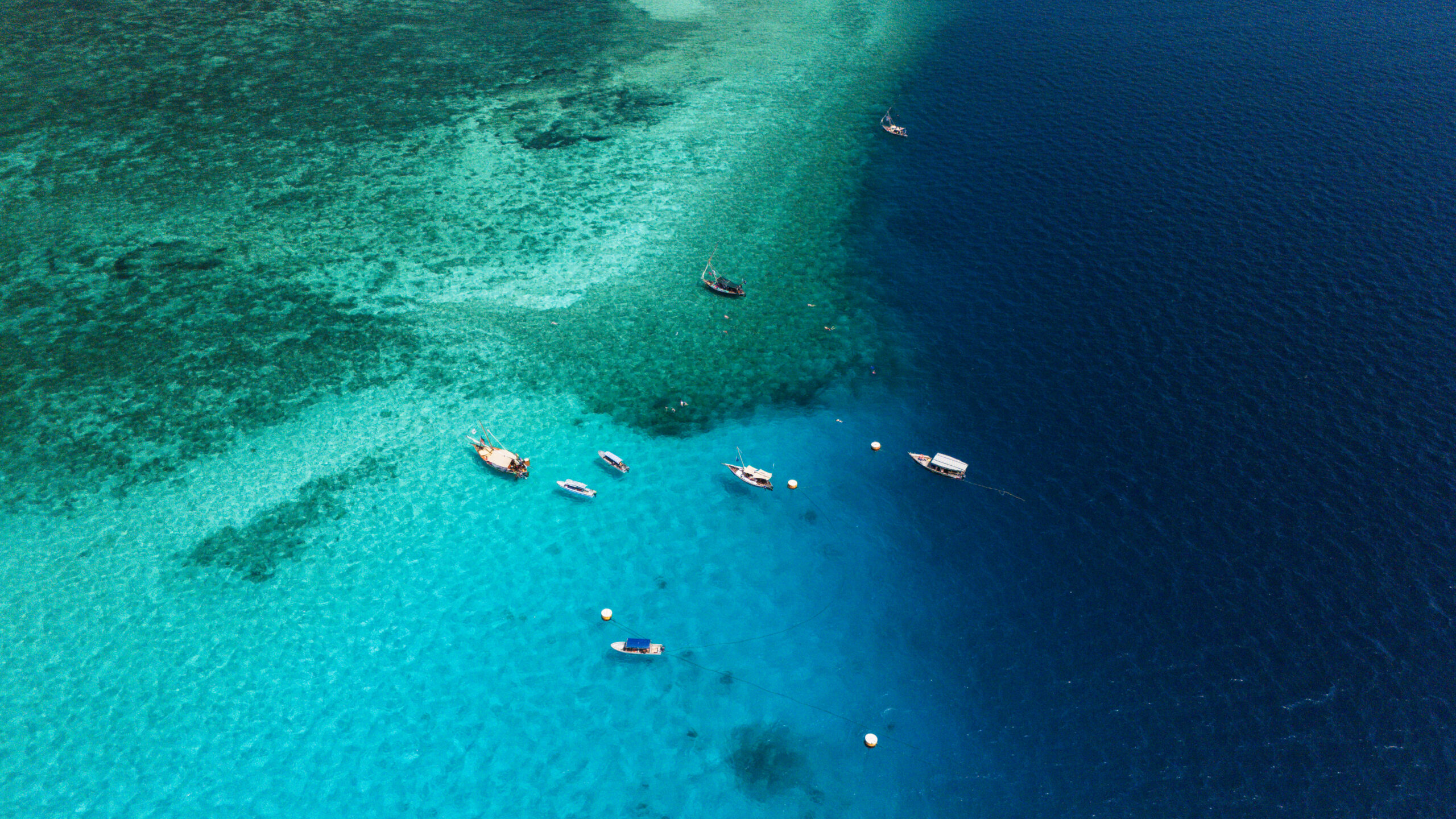
Mnemba Atoll is the most famous diving area around Zanzibar. It lies off the northeast coast of the main island and offers several types of diving, including reef, wall and drift dives.
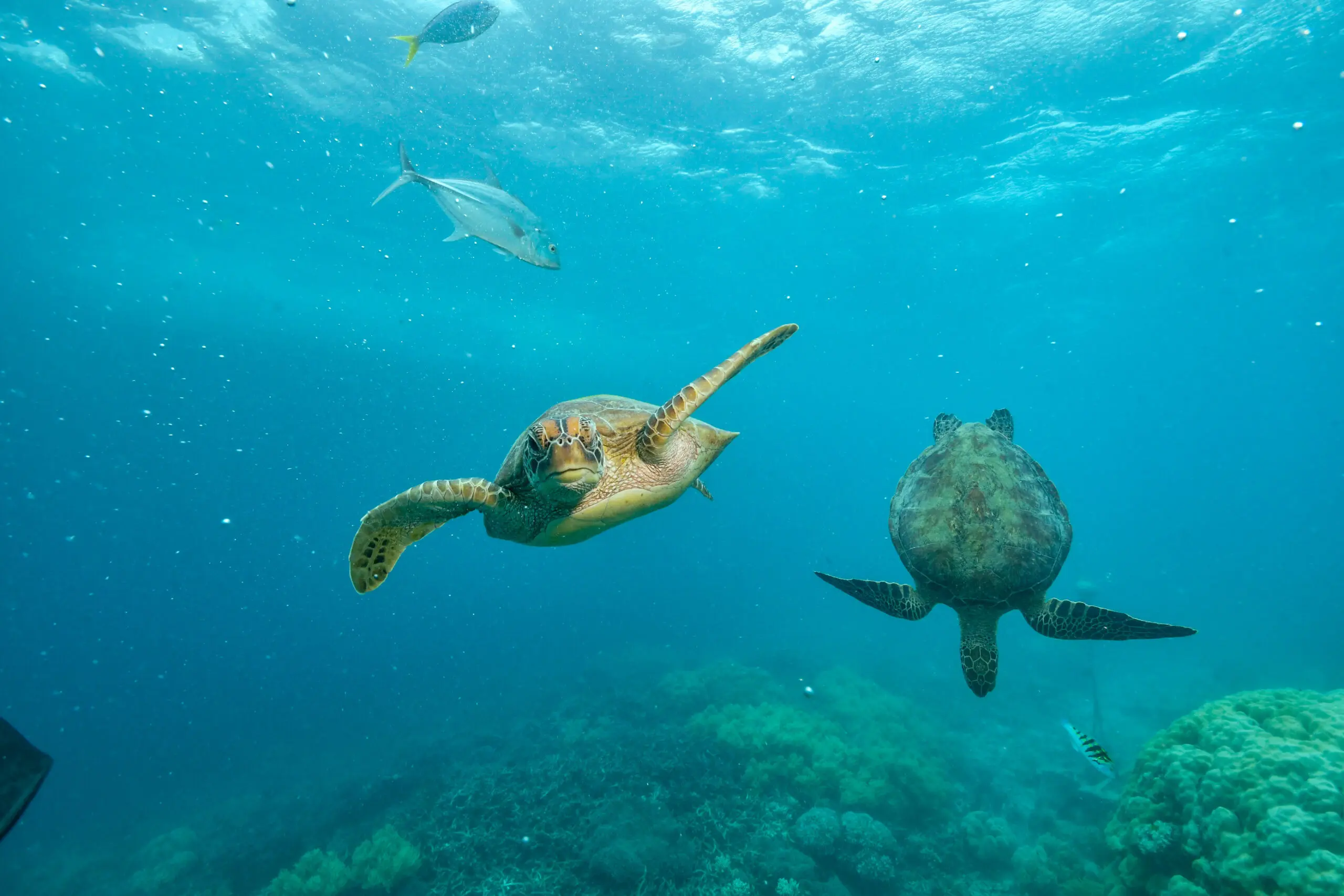
The area is known for coral reefs and a wide variety of tropical marine life. Divers may encounter turtles, rays, barracuda, moray eels and large schools of reef fish. Sightings vary naturally from one dive to another and no particular species can be guaranteed.
One of the strengths of Mnemba is its variety. There are dive sites suitable for certified divers with different levels of experience, while the exact site is selected according to certification, ability and local sea conditions.
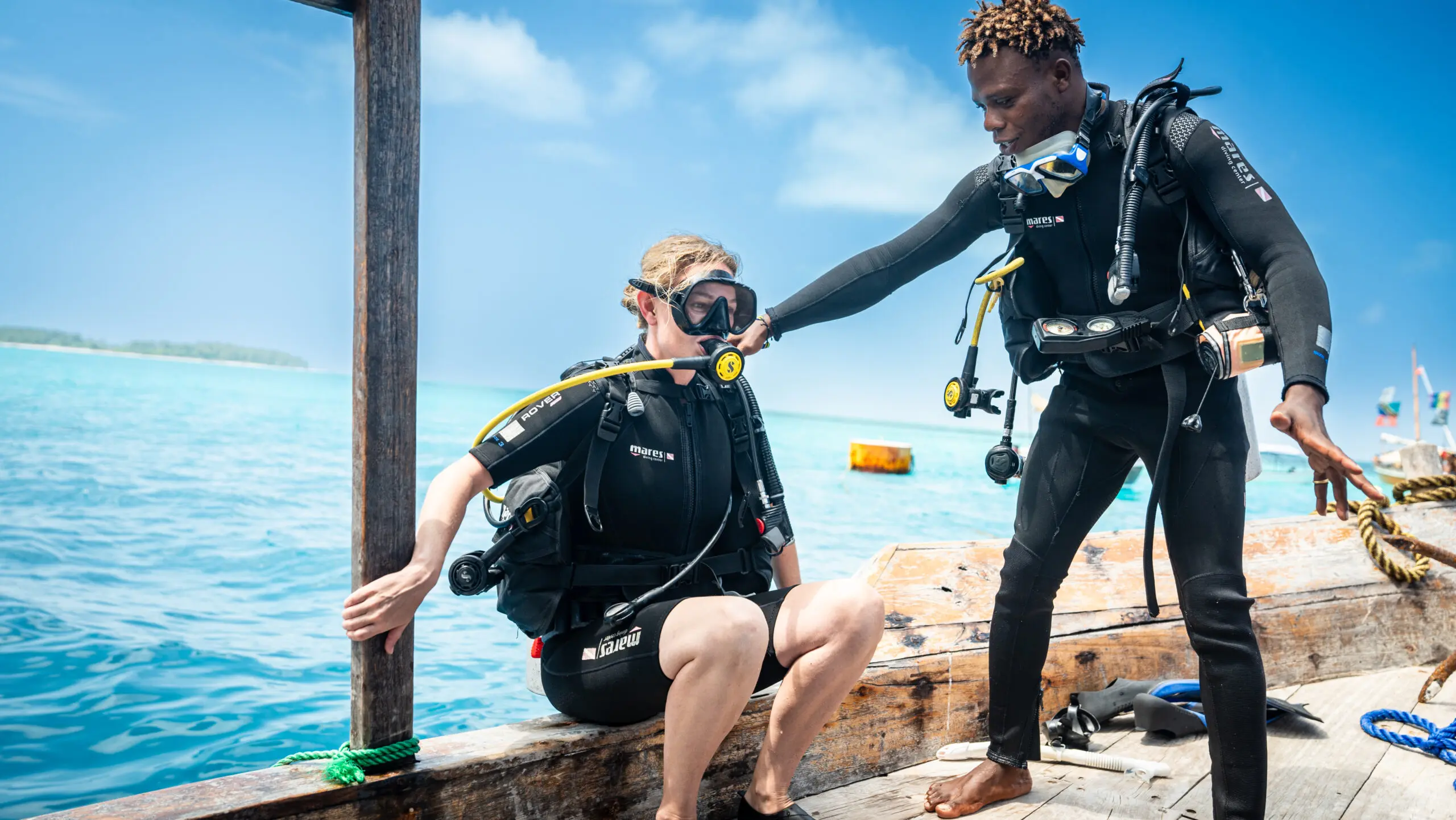
A diving certification is required to join regular scuba dives at Mnemba Atoll. Travelers who are not yet certified can instead ask a recognized dive center about an introductory diving program under professional supervision.
Shemeji Safari also includes a double dive at Mnemba Atoll in our Diving Holiday in Zanzibar.
Diving around Nungwi and Kendwa
The northern coast around Nungwi and Kendwa is another important base for diving Zanzibar. Dive centres in this area have access to a range of reefs, from shallower coral sites to deeper and more challenging locations.
The variety is useful when travelling with divers who have different levels of experience. Site selection can be adapted to certification, confidence and sea conditions.
Nungwi and Kendwa also provide access to offshore locations in the north, including Leven Bank when currents, tides and weather allow.
Our Zanzibar diving holiday includes diving around Kendwa and Nungwi as part of the itinerary.
Diving around Tumbatu
Tumbatu lies off the northwest coast of Zanzibar and provides another alternative to the better known Mnemba area. Dive sites around the island include shallower reef environments with hard and soft corals and tropical reef fish.
Tumbatu can be particularly interesting for divers who want to experience another part of Zanzibar’s underwater landscape rather than spending every dive at the same location.
Conditions vary between individual sites, so depth and certification requirements should always be checked with the dive centre before entering the water.
Diving at Leven Bank
Leven Bank is one of Zanzibar’s more challenging dive sites. It is an offshore seamount north of the island, with the top beginning at around 14 meters and the sides descending much deeper.
Strong currents are common, which is why Leven Bank is suitable for experienced divers only. These currents can attract large schools of fish, including trevally, tuna and other pelagic species.
Conditions must be suitable before a dive can take place. Leven Bank is therefore not a location that should be treated as a guaranteed part of a Zanzibar diving itinerary. Always ask your dive center whether your experience level and the conditions on the day are suitable for diving Leven Bank.
Diving around Stone Town
Stone Town is another possible base for diving in Zanzibar. Dive operators on the west coast have access to dive sites in the waters around this part of the island, offering an alternative to the better known northern and northeastern diving areas.
This can be particularly convenient for travelers staying in or around Stone Town who want to include diving without travelling to Nungwi or the Mnemba area for every dive.
As elsewhere in Zanzibar, the exact dive site should be selected by the local dive team according to your certification and experience as well as the tides, currents, wind and sea conditions on the day.
Diving in Menai Bay
Menai Bay is a conservation area on the southwest side of Zanzibar’s main island. The area contains islands, sandbanks and coral reefs and offers another side of Zanzibar diving away from the busier northern coast.
Local dive operators in Menai Bay use sites ranging from relatively shallow reefs to deeper recreational dives. Coral formations and tropical fish are among the main attractions.
The southwest can be especially useful for travelers staying in this part of Zanzibar who want to dive without travelling to the northern coast for every dive.
When is the best time for diving in Zanzibar?
Diving in Zanzibar is possible throughout the year. Water remains warm in every season, but visibility, wind, currents and surface conditions change during the year.
There is no single best month for every dive site. Conditions on the northern coast can differ from those in the south, and wind direction has a strong influence on boat journeys and the sites that can be reached comfortably.
PADI reports water temperatures of roughly 24 to 29°C throughout the year. Visibility can be very good, but the exact conditions vary considerably depending on the location, season, wind, currents and tides. It is therefore better not to plan a dive based on a promised visibility distance.
For broader information about rainfall and seasons on the island, our Zanzibar weather guide explains the climate throughout the year.
Diving Zanzibar from January to March
January and February are among Zanzibar’s warmest months. Water temperatures are also near their warmest levels, making long dives comfortable for many divers.
These months fall within a relatively dry period on Zanzibar. Sea conditions still depend on local winds, tides and the part of the island where you dive.
March remains warm but gradually moves towards the longer rainy season. Diving remains possible, although changing weather can influence boat trips and daily site selection.
Diving Zanzibar from April to June
April and May fall within Zanzibar’s long rainy period, but they can still be an excellent time for diving. There is a higher chance of rain and surface conditions can change, yet dry periods can provide very enjoyable diving conditions.
These months are also quieter in terms of tourism, which can mean fewer visitors and less activity around some dive areas. Marine life remains abundant, making April and May an interesting period for divers who do not mind being flexible around the weather.
Underwater visibility does not simply follow rainfall in the same way at every dive site. Currents, wind and local conditions all play a role, which means the dive center should make the final decision about where to dive.
June marks the transition into the main dry period. Rainfall decreases and conditions become more predictable, while water temperatures begin to feel slightly cooler than at the beginning of the year.
Diving Zanzibar from July to September
July, August and September fall within Zanzibar’s main dry period. Air temperatures are comfortable and rainfall is relatively low, making these popular months for visiting the island.
The water is somewhat cooler during July and August, commonly around 24 to 25°C according to PADI. Many divers choose a suitable wetsuit for longer or repeated dives.
Wind can still influence the sea state and the comfort of boat trips. September begins to warm again and can offer attractive conditions for combining diving with a wider Zanzibar holiday.
Seasonal marine life can also pass through the waters around the archipelago. Humpback whales migrate through the wider region during part of this period, although sightings from boats or underwater are never guaranteed.
Diving Zanzibar from October to December
October marks another seasonal transition. Water temperatures rise and Zanzibar moves towards the shorter rainy period.
Parts of the northern coast can experience attractive combinations of visibility and calmer sea conditions during parts of October, November and early December. Actual conditions vary from year to year and should always be assessed locally.
November and December can bring tropical showers, but diving continues. Rain on land does not automatically mean poor conditions underwater, although wind and sea state may change which sites are suitable on a particular day.
How warm is the water when diving in Zanzibar?
The Indian Ocean around Zanzibar is warm throughout the year. PADI reports water temperatures ranging from approximately 24 to 25°C during July and August to around 28 to 29°C in January and February.
Many divers are comfortable in a light wetsuit during the warmer months. A slightly thicker wetsuit may feel more comfortable during repeated dives or during the cooler part of the year.
Personal comfort differs, so it is worth discussing exposure protection with your dive operator if you tend to feel cold underwater.
How good is the visibility when diving in Zanzibar?
Visibility in Zanzibar can be excellent, but it changes according to the dive site, wind, tide, currents and season. Conditions can also differ considerably from one day or location to another.
Offshore sites can have particularly clear water when conditions are favorable, while local weather or currents may reduce visibility on another day. It is therefore better to treat visibility figures as an indication rather than a promise.
A local dive center can advise which sites are offering the best conditions at the time of your dive.
What marine life can you see while diving Zanzibar?
Zanzibar’s reefs support a wide range of Indian Ocean marine life. Common reef encounters can include colorful reef fish, moray eels, nudibranchs, barracuda, rays and turtles.
Different dive sites attract different species. Stronger-current sites such as Leven Bank can bring larger schooling and pelagic fish, while coral reefs around Mnemba, Tumbatu and the coast provide habitat for smaller reef species.
Turtles are regularly seen at a number of Zanzibar dive sites. Dolphins are present in the wider waters around the archipelago, and seasonal whales pass through the region.
Larger species such as whale sharks, manta rays or sharks are possible encounters, but they should never be presented as guaranteed sightings. Marine life moves freely and every dive is different.
Can beginners go diving in Zanzibar?
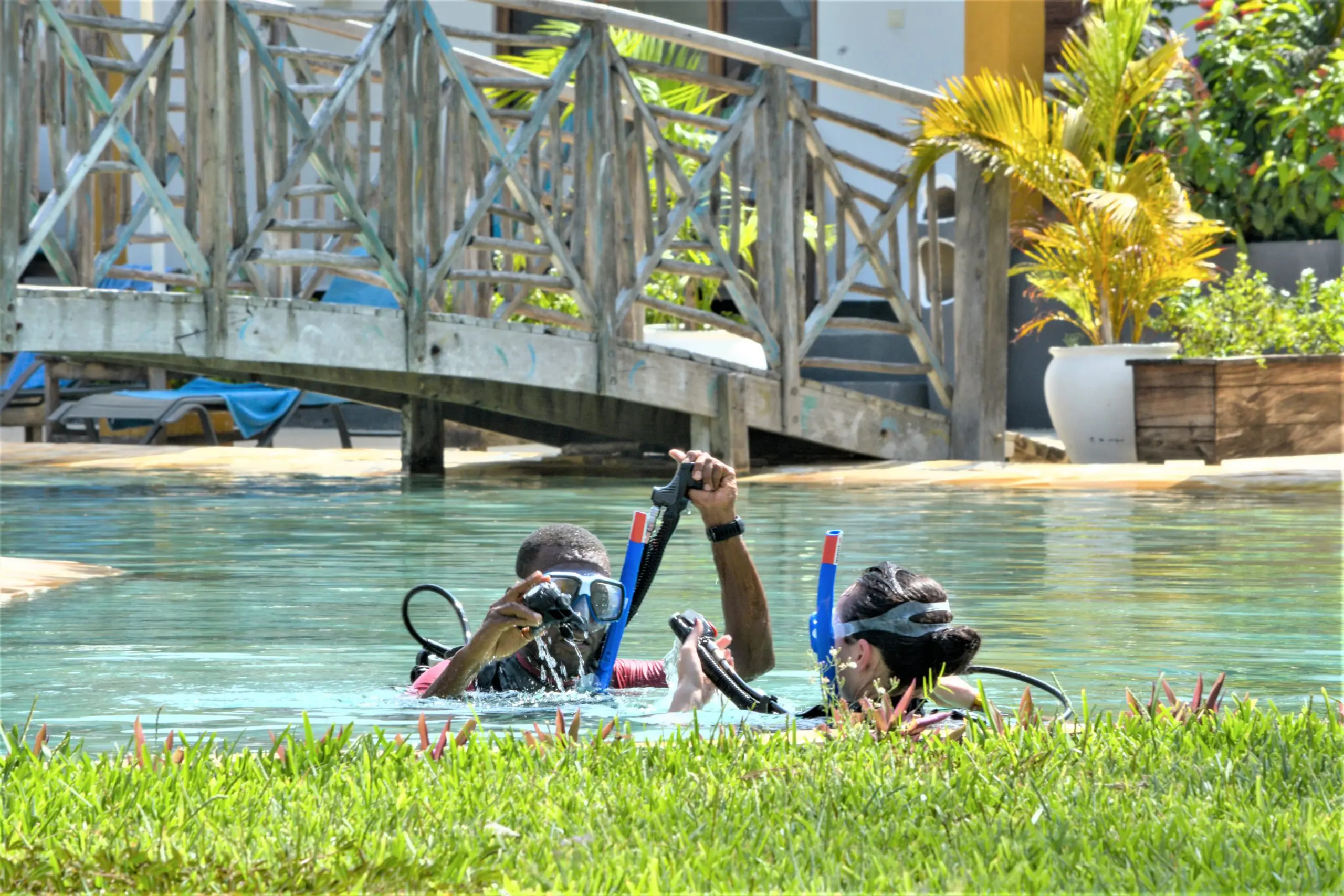
Yes. Zanzibar has opportunities for complete beginners as well as certified divers. Several dive centers offer introductory experiences and PADI courses for people who have never used scuba equipment before.
A beginner does not need to start at a deep or current-exposed dive site. Introductory diving takes place under professional supervision, with the dive center selecting a location appropriate for the participant’s ability and the conditions.
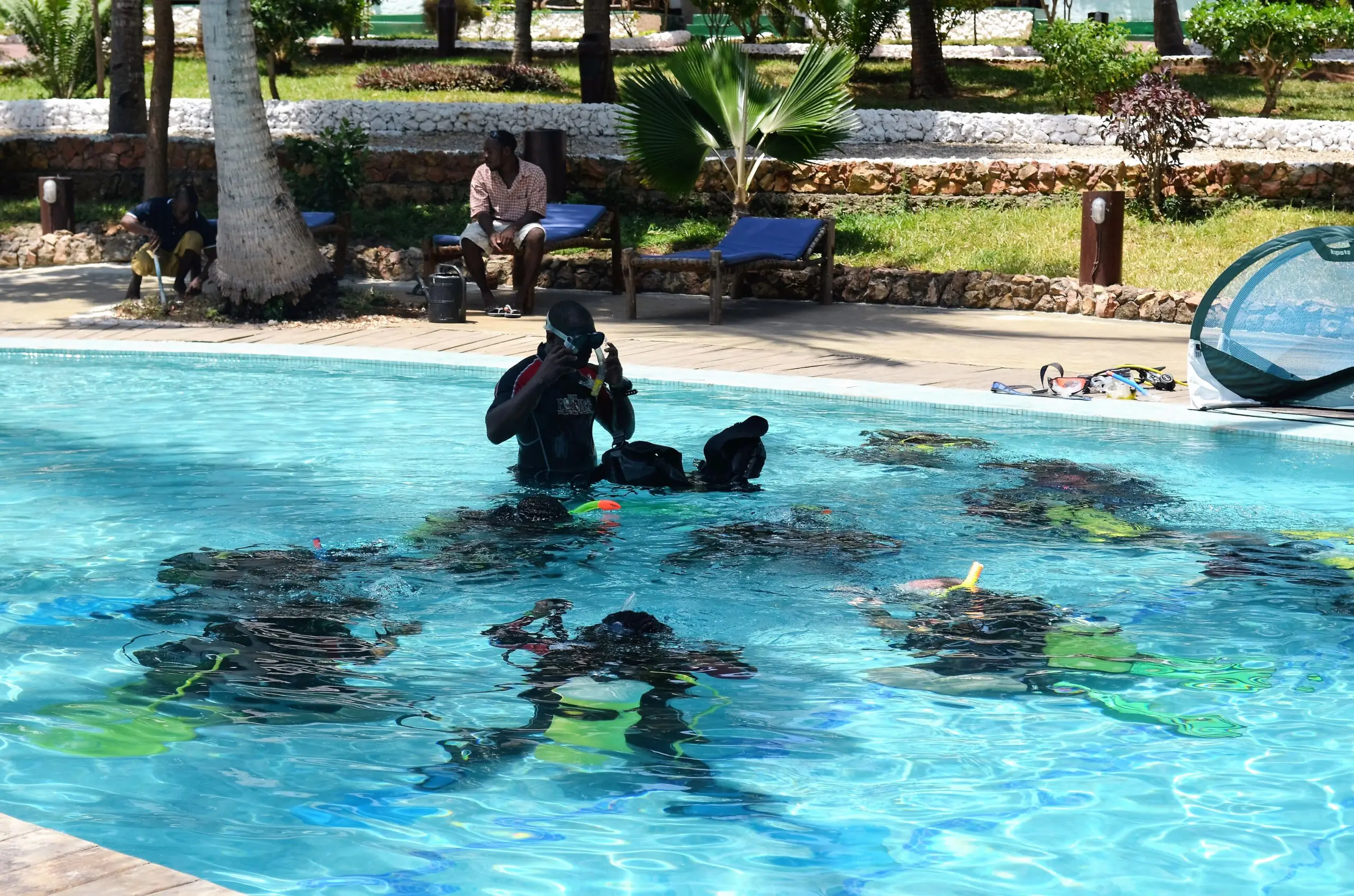
PADI Discover Scuba Diving allows beginners to experience scuba diving under professional supervision without first completing a full diving certification. Travelers who want to become certified can also complete an Open Water Diver course during a longer stay.
More information about recognized training levels is available through PADI.
Can certified divers dive in Zanzibar?
Certified divers have a wide choice of sites around Zanzibar. The best location depends on certification level, recent diving experience, logged dives and conditions on the day.
Diving in Zanzibar is guided. Even certified divers dive with a qualified local dive professional rather than independently. The dive team selects suitable sites based on safety, certification, experience and current marine conditions.
Divers who have not been underwater for some time may be advised to complete a refresher before joining more demanding dives. Shemeji Safari’s Diving Holiday in Zanzibar begins with a refresher session before the program continues with multiple double dives.
More experienced divers can explore deeper reefs and stronger-current sites when conditions and certification allow. Leven Bank is one example where appropriate experience is particularly important.
What does a typical diving day in Zanzibar look like?
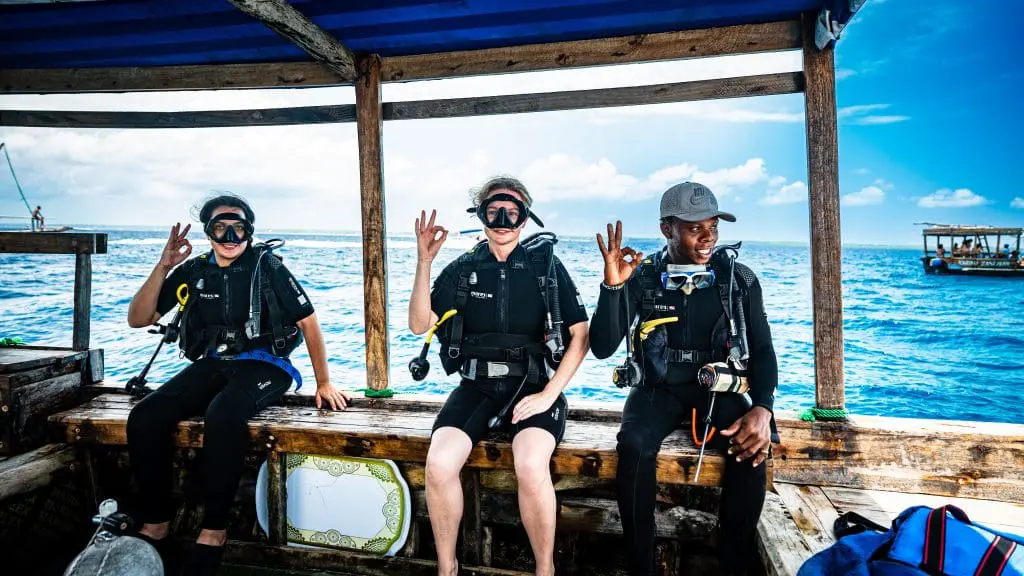
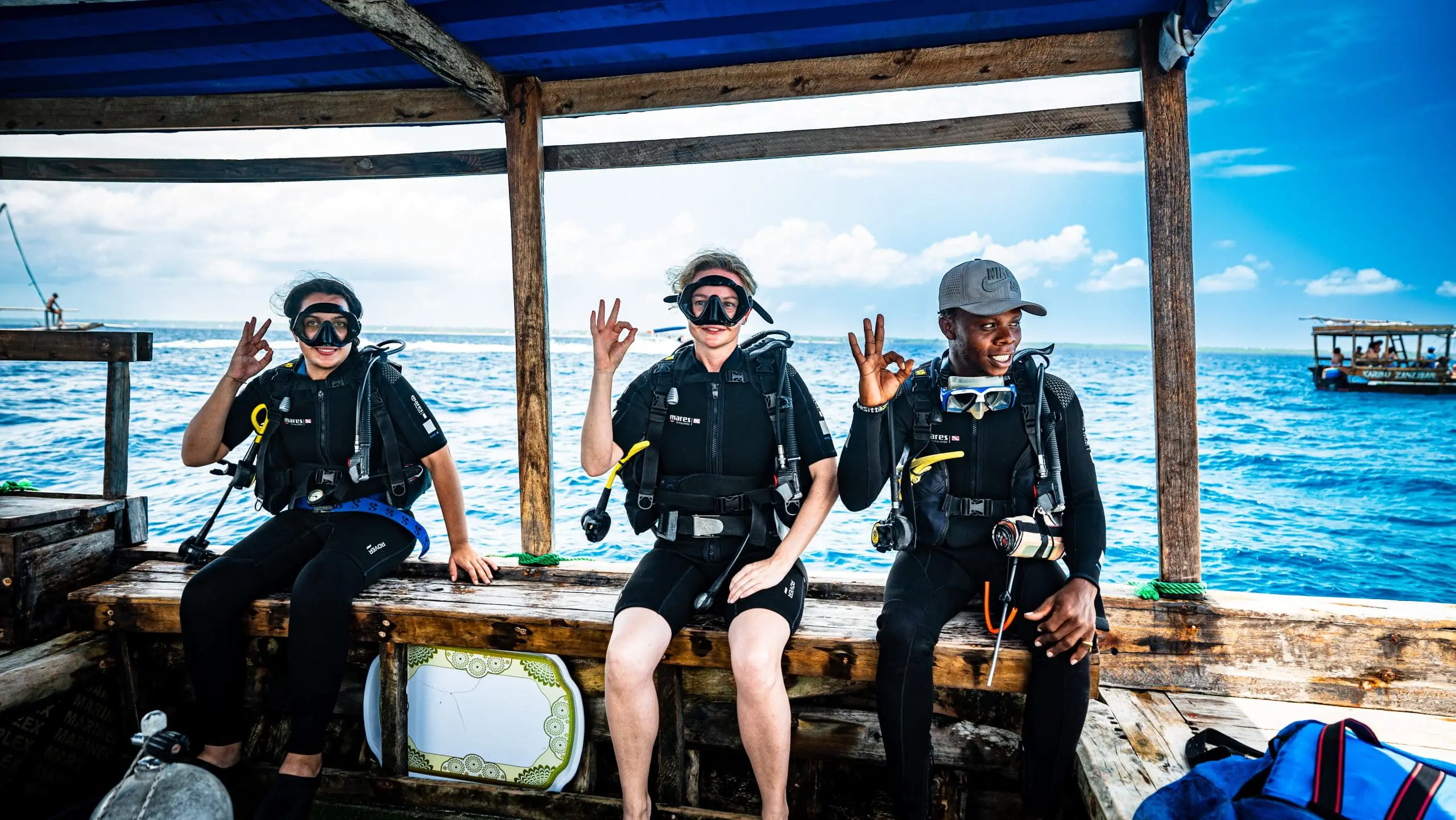
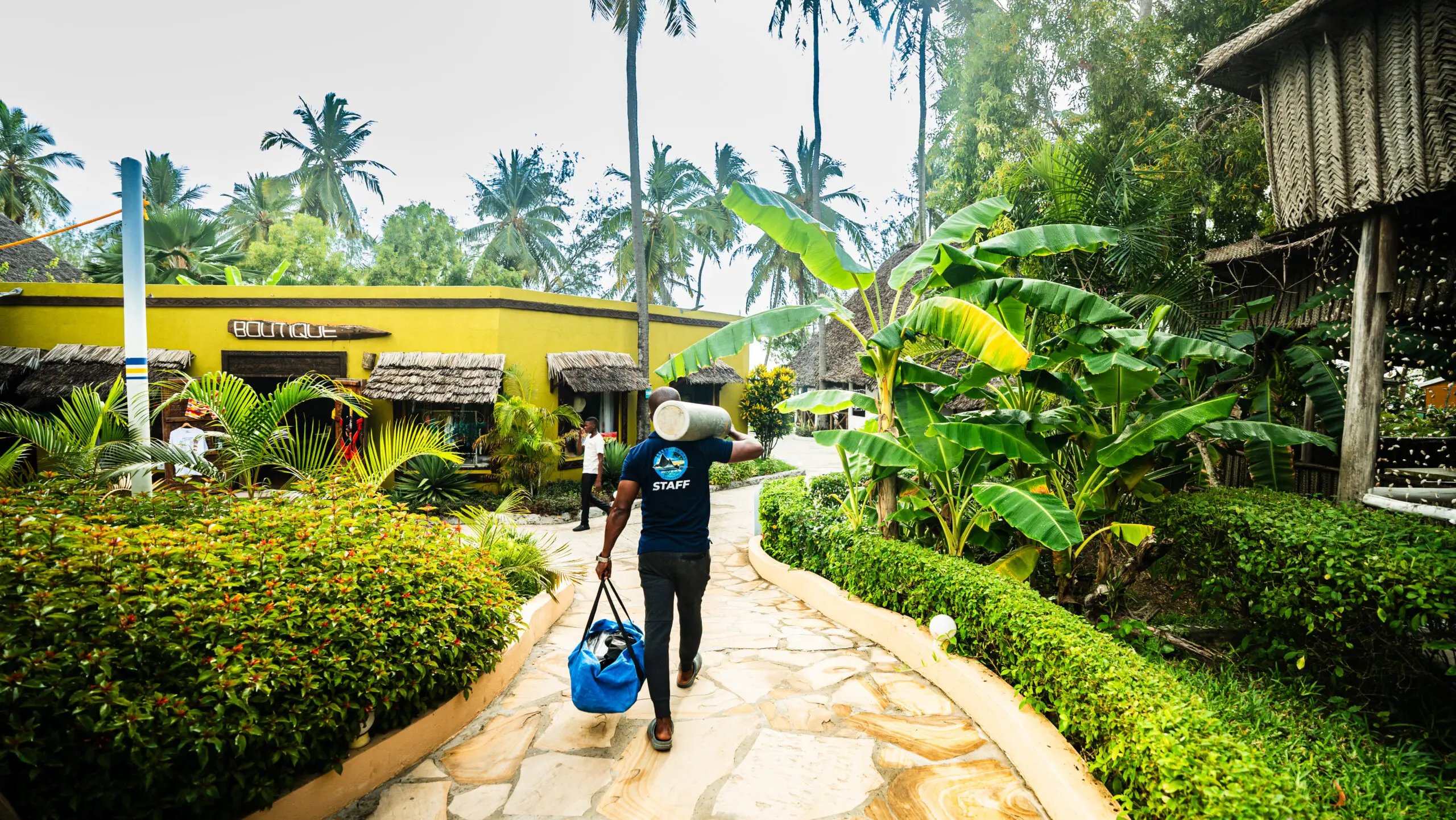
Many Zanzibar dives are boat dives. A typical diving morning often begins at the dive center, where equipment is prepared and the team checks certification, experience and the conditions for the day.
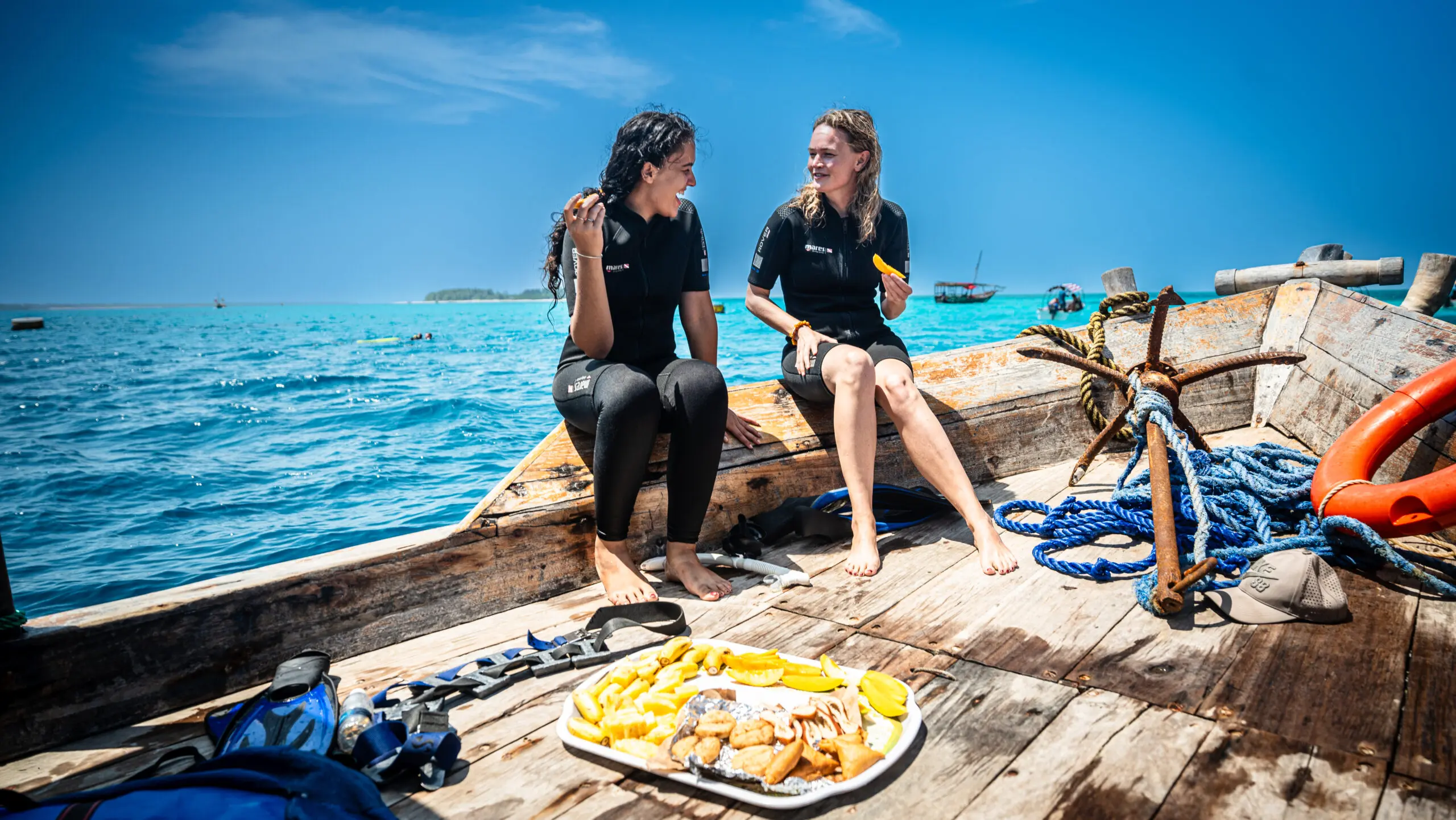
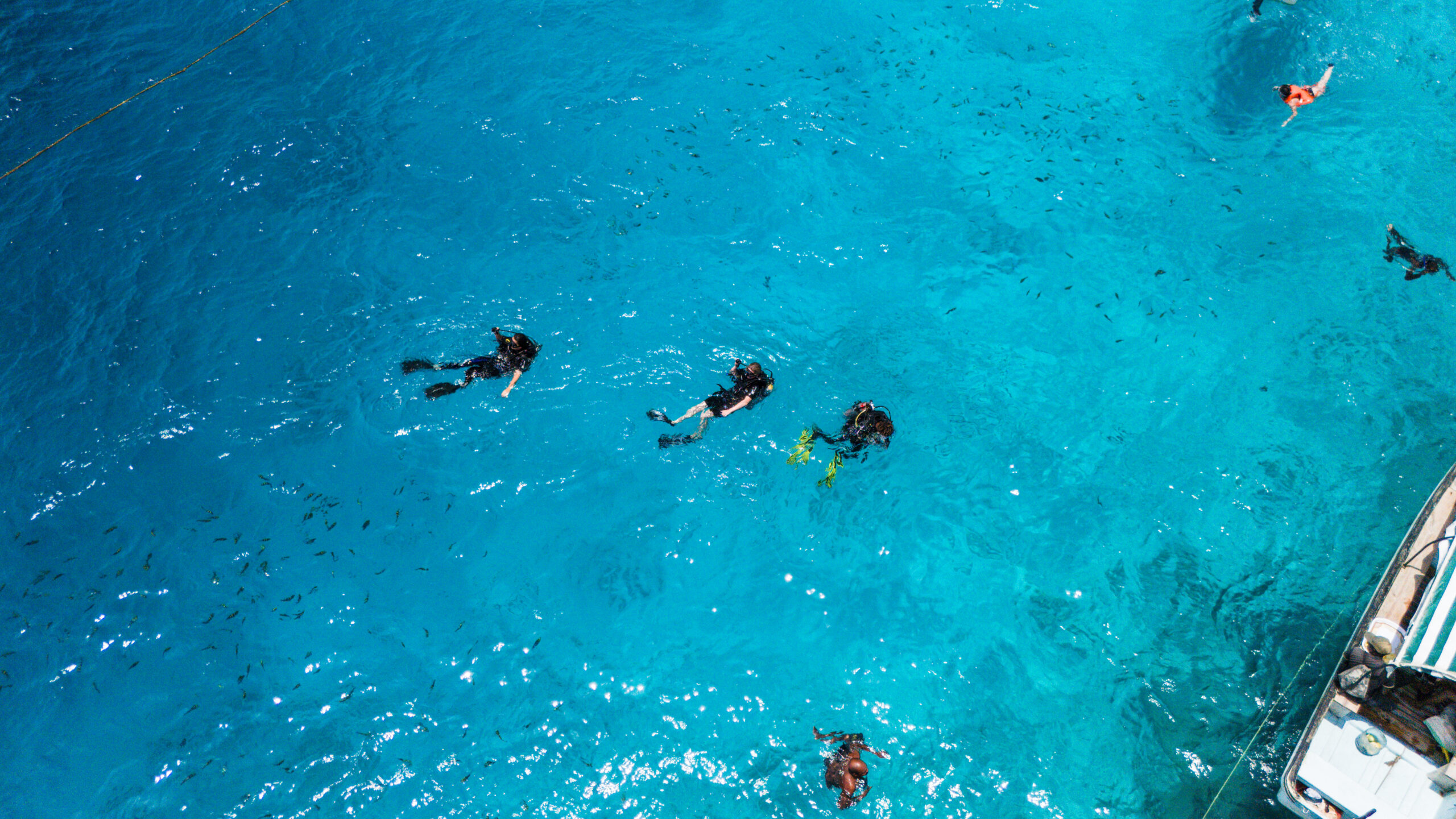
Double dive trips are common. Divers travel by boat to the first site, complete a dive and spend a surface interval above water before the second dive. The total duration depends on the distance to the dive sites.
Sites close to the coast can make for a shorter trip, while offshore locations such as Mnemba or Leven Bank require more travel time.
The exact program should remain flexible. Tides, wind and currents can make one dive site more suitable than another on a particular day.
Is Mnemba better for diving or snorkeling?
Mnemba is suitable for both diving and snorkeling, but the experiences are different. Scuba diving allows certified divers to spend more time below the surface and explore deeper sections of the reef, walls and underwater landscape.
Snorkeling is more accessible and does not require a diving certification. It is a good option for travelers who want to see reef life from the surface or for groups where not everyone wants to scuba dive.
Shemeji Safari offers Mnemba snorkeling for travelers who prefer to explore the area without scuba equipment.
What is the difference between snorkeling and scuba diving in Zanzibar?
Snorkeling takes place at the surface using a mask, snorkel and fins. It requires less equipment and is accessible to a wider range of travelers.
Scuba diving uses a breathing system that allows you to remain underwater and explore reefs at greater depth. Regular recreational dives require the appropriate certification and are guided by a qualified dive professional. Travelers without a certification can only participate through an appropriate introductory program under professional supervision.
Both activities provide access to Zanzibar’s marine environment. The right choice depends on your experience, comfort in the water and how much time you want to spend below the surface.
What should you know about currents and tides in Zanzibar?
Currents and tides are an important part of diving Zanzibar. Several sites are suitable for drift diving, where divers move with the current rather than swimming against it.
Current strength can vary considerably. A site that is comfortable on one day may be unsuitable for the same group on another day. Offshore sites such as Leven Bank are particularly sensitive to current and tide conditions.
This is why local site selection matters. The dive team should consider tide, wind, current, certification and experience before deciding where a group will dive.
What should you pack for diving Zanzibar?
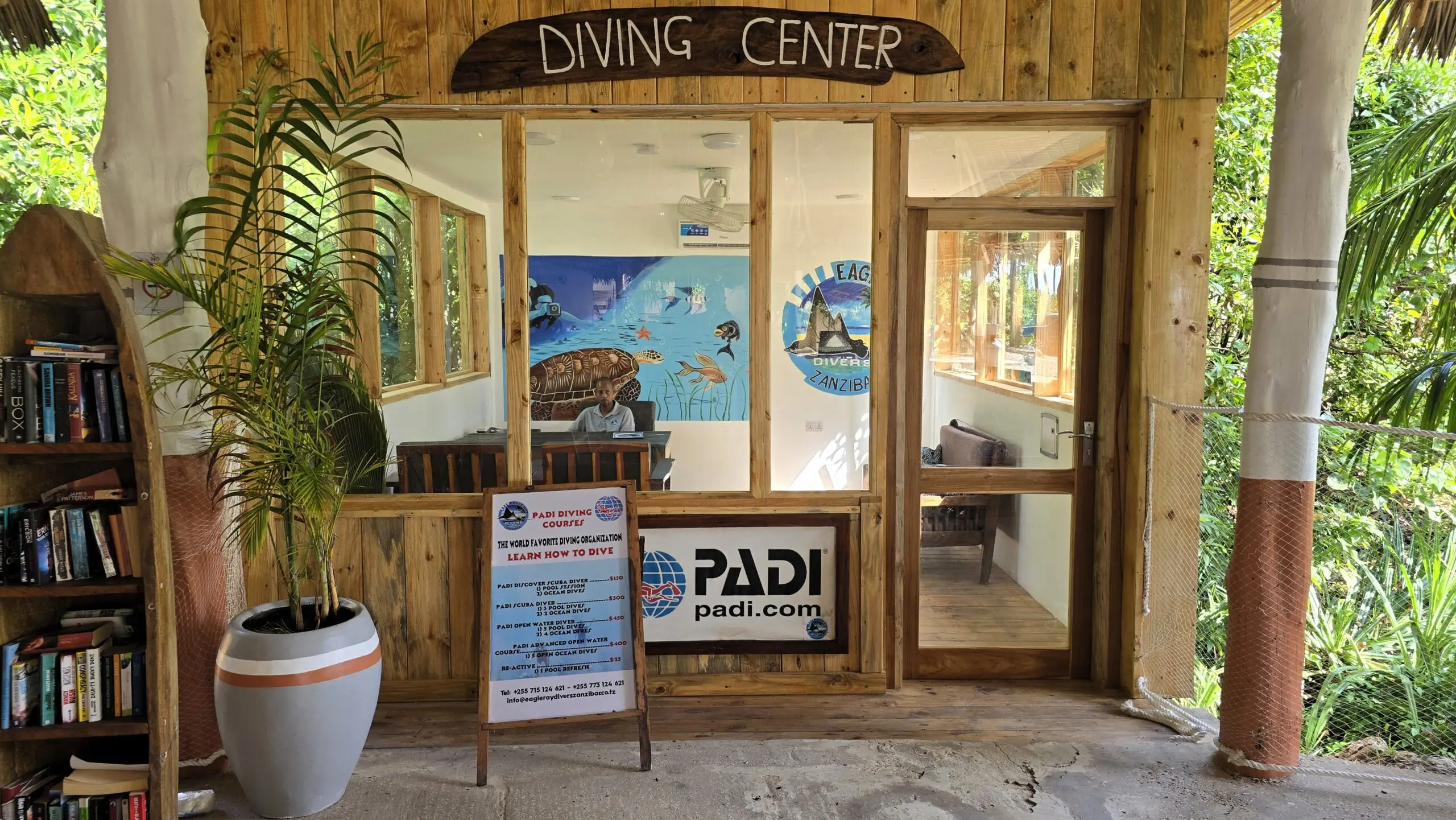
Dive centers normally provide or rent the main scuba equipment, so you do not need to bring a complete set of diving equipment unless you prefer using your own gear.
- Proof of certification: certified divers should be able to show their qualification. For many organizations, this is now available digitally through an app.
- Swimwear: useful underneath your wetsuit and before or after your dive.
- Towel: useful during boat trips and between dives.
- Wetsuit: usually available through the dive center, although regular divers may prefer their own. Exposure protection depends on the season and personal comfort.
- Sun protection: useful during boat journeys and surface intervals.
- Light clothing: practical for Zanzibar’s warm climate before and after diving.
Dive computers, masks and other main diving equipment can normally be rented from dive centers, so bringing your own is a personal preference rather than a requirement.
Always check what is included with the dive operator before travelling with heavy equipment. Rental availability and equipment specifications can differ between dive centers.
Can you fly after diving in Zanzibar?
You must leave sufficient time between your final scuba dive and flying. Residual nitrogen remains in the body after diving, so travelling to altitude too soon can increase the risk of decompression sickness.
Follow the no-fly instructions given by your dive instructor and shown by your dive computer. If more than one dive computer has been used, follow the most conservative no-fly time displayed.
Your itinerary should include a final day without diving before flying home. This no-dive period should be taken into account when planning the diving program rather than treated as an optional extra.
Can you combine diving Zanzibar with a safari?
Yes. Diving and safari work well in one Tanzania journey because Zanzibar is easily combined with the safari areas on the mainland.
A safari can be followed by several days on Zanzibar, giving you time to combine dive days with the beaches, Stone Town and other island activities.
The best sequence depends on your flights, diving schedule and how much time you have. When diving is planned near the end of the holiday, the required no-dive interval between the final dive and your flight must be included in the itinerary.
Our Tanzania and Zanzibar holidays combine safari and island time in one trip.
Plan a diving holiday in Zanzibar
Zanzibar offers much more underwater than one famous reef. Mnemba provides varied diving for different levels, northern Zanzibar gives access to reefs and offshore sites, while locations such as Tumbatu, Leven Bank, Stone Town and Menai Bay add further variety.
The best diving itinerary depends on your certification, experience, travel period and the type of diving you enjoy. It also helps to leave room for changing conditions rather than deciding every dive site before arrival.
Shemeji Safari is a local Tanzania-based tour operator with our team based in Arusha. Our Diving Holiday in Zanzibar combines a beachfront stay with a refresher session, multiple double dives, Mnemba Atoll and diving around Kendwa and Nungwi.
You can also explore our Zanzibar holidays if you want to combine diving with more time for the beaches, culture and other activities on the island.
Frequently asked questions about diving Zanzibar
Yes. Zanzibar offers warm water, coral reefs and more than 30 recognized dive sites. There are opportunities for beginners under professional supervision, recreational certified divers and experienced divers looking for deeper or stronger-current sites.
Mnemba Atoll is the best known diving area in Zanzibar because it combines several reef environments with diverse marine life. Nungwi, Kendwa, Tumbatu, Leven Bank, Stone Town and Menai Bay provide additional options.
There is no single best site for every diver. Ask a local dive instructor or dive center for a recommendation based on your certification and experience and the current marine conditions.
Diving in Zanzibar is possible throughout the year. Water temperatures generally range from around 24 to 29°C. Visibility and sea conditions vary with the season, wind, tide and location, so there is no single month that is best for every dive site.
Yes. Beginners can try scuba diving under professional supervision through an introductory program such as PADI Discover Scuba Diving. Zanzibar also has dive sites suitable for newly certified divers, depending on local conditions.
For regular recreational scuba dives, you need an appropriate diving certification. Divers are still guided by a qualified dive professional regardless of their certification level; diving independently or alone is not part of the normal recreational diving program.
Travelers without certification can experience scuba diving through a recognized introductory program under direct professional supervision.
Water temperatures around Zanzibar are warm throughout the year. PADI reports temperatures of around 24 to 25°C during July and August and approximately 28 to 29°C in January and February.
Visibility can be very good but varies according to the dive site, tide, wind, currents and seasonal conditions. Your local dive center can advise which sites are offering the most suitable conditions on the day.
Divers in Zanzibar can encounter tropical reef fish, turtles, rays, barracuda, moray eels, nudibranchs and schooling fish. Larger marine animals can also occur, but individual wildlife encounters can never be guaranteed.
Yes. Mnemba Atoll is one of Zanzibar’s main diving areas and offers reef, wall and drift diving. Regular scuba dives require certification, and different sites around the atoll suit different experience levels. The final location is selected by the dive team according to certification, experience and current conditions.
No. Leven Bank is an offshore seamount with strong currents and significant depth and is suitable for experienced divers only. Ask your dive center whether your certification, experience and the conditions on the day make the site appropriate for you.
Yes. Diving and snorkeling can easily be combined during a Zanzibar holiday. Mnemba is particularly popular for both activities, making it useful for couples or groups where some travelers want to scuba dive and others prefer snorkeling.